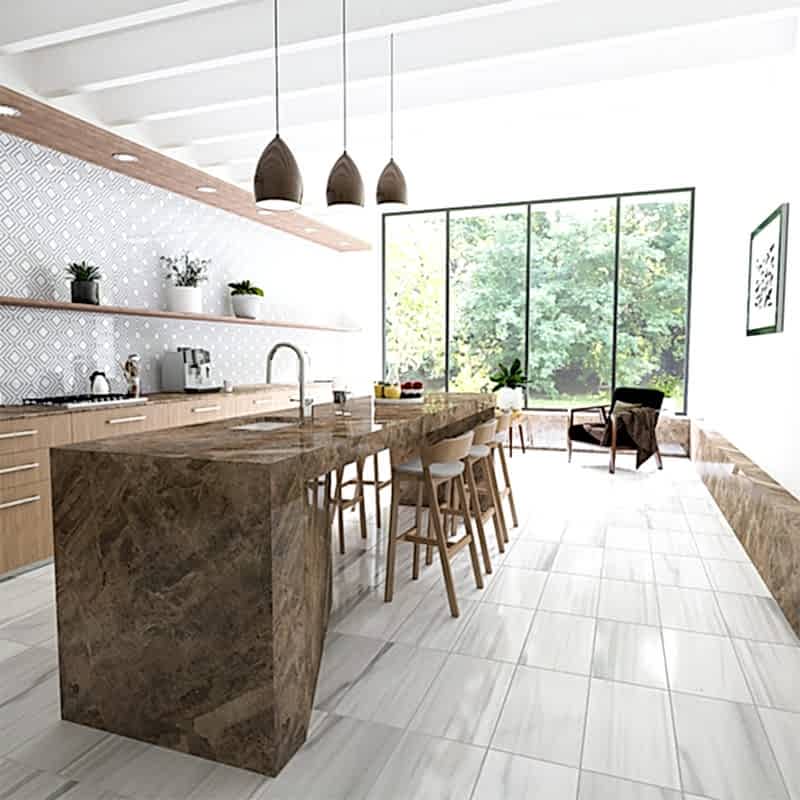
Quartz vs. Quartzite Countertops: Understanding the Difference Between Quartz and Quartzite
When shopping for new kitchen countertops, the terminology can be confusing. While their names sound nearly identical, quartz and quartzite are fundamentally different materials with distinct origins, maintenance needs, and performance characteristics.
Quartzite is a natural stone with elegant veining similar to marble, while quartz is an engineered surface that offers lower maintenance and a wider range of colors, each with its own strengths for kitchen countertops
This guide breaks down the debate to help you decide which material aligns best with your lifestyle, budget, and design vision.

The Core Difference: Origin and Composition
The primary distinction lies in how these materials are born.
- Quartzite (Natural Stone): This is a metamorphic rock that originates as sandstone.2 Over millions of years, intense heat and pressure deep within the earth fuse quartz grains together, creating an incredibly hard, natural slab. Because it is quarried directly from the earth, every slab features unique, unrepeatable veining. Stones like marble share this natural origin but lack quartzite’s density.
Quartz (Engineered Material): Often called “engineered stone,” this is a man-made product.3 Manufacturers combine roughly 90-93% crushed natural quartz crystals with 7-10% poly-resin binders and pigments. This process occurs in a factory setting, allowing for controlled consistency in color and pattern.
Hardness and Durability Comparison
Both materials excel in durability, making them ideal for high-traffic kitchens, but they handle stress differently.
Scratch Resistance:
Quartzite is harder. Rating a 7 or 8 on the Mohs hardness scale, it is actually harder than granite and glass. It resists knife scratches exceptionally well. Engineered quartz is slightly softer (Mohs 7) but still highly resistant to daily wear.
Chipping and Flexibility:
Here, the engineered option has an edge. The resin binders in quartz make the slab slightly more flexible and less brittle than natural stone.5 While quartzite is harder, it is more prone to chipping if a heavy pot bangs against a sharp edge.

The Dealbreaker: Heat Resistance
For serious home chefs, heat tolerance is often the deciding factor.
- Quartzite: Born from heat, it can withstand it.6 You can typically place hot pans directly from the oven onto a quartzite countertop without damaging the surface.
- Quartz Countertops: The resin used to bind the crystals is plastic-based and melts at temperatures around 300°F (approx. 150°C). Placing a searing hot skillet directly on engineered quartz can cause permanent scorch marks or discoloration.7 You must use trivets or hot pads.
Maintenance Wars: Sealing vs. Non-Porous
How much effort do you want to put into keeping your countertops looking new?
- The Zero-Maintenance Option (Quartz): Being non-porous, engineered stone does not absorb liquids.8 It naturally resists bacteria and stains from wine, coffee, or oil. Clean-up requires nothing more than soap and water.
- The Natural Stone Care (Quartzite): Like granite, quartzite is porous.9 To prevent stains from seeping into the stone, it must be sealed upon installation and resealed periodically (usually every 1–2 years). If you fail to seal it, acidic spills like lemon juice or red wine can leave permanent marks.
Aesthetics: Natural Beauty vs. Design Versatility
Quartzite offers the “wow” factor of nature.10 It is often chosen as a more durable alternative to marble, featuring sweeping gray and white veins that look organic and luxurious.11 Since it is natural, color options are limited to what the earth produces.
Quartz offers unlimited design control. Because it is manufactured, it can be produced in pure whites, solid blacks, or vibrant colors that nature doesn’t provide. Modern technology allows it to mimic the look of natural stone, but with a uniformity that makes matching seams in large kitchens much easier.

Summary Comparison Table
Feature | Quartzite (Natural) | Quartz (Engineered) |
Origin | Quarried natural metamorphic rock | Manufactured (Crushed stone + Resin) |
Heat Resistance | Excellent (Can hold hot pans) | Low to Moderate (Requires trivets) |
Maintenance | Requires periodic sealing | Maintenance-free (Never needs sealing) |
Porosity | Porous (Can stain if unsealed) | Non-porous (Stain & bacteria resistant) |
Scratch Resistance | Superior (Harder than glass) | High |
Cost | High ($70–$200+ per sq. ft.) | Moderate to High ($50–$150 per sq. ft.) |
Which Is Right for You?
Choose Quartzite if:
- You want the authentic, unique look of natural stone.
- You love the look of marble but need something strong like quartzite.
- You want a surface that can handle hot pans directly.
- You are willing to seal your countertops once a year.
Choose Quartz if:
- Anyone who wants a strictly “install it and forget it” low-maintenance surface.
- You have young children and worry about spills and bacteria.
- You prefer a consistent pattern without natural imperfections.
- You want quartz countertops with a modern, uniform look or specific colors not found in nature.